
Brain Health • Hearing Loss
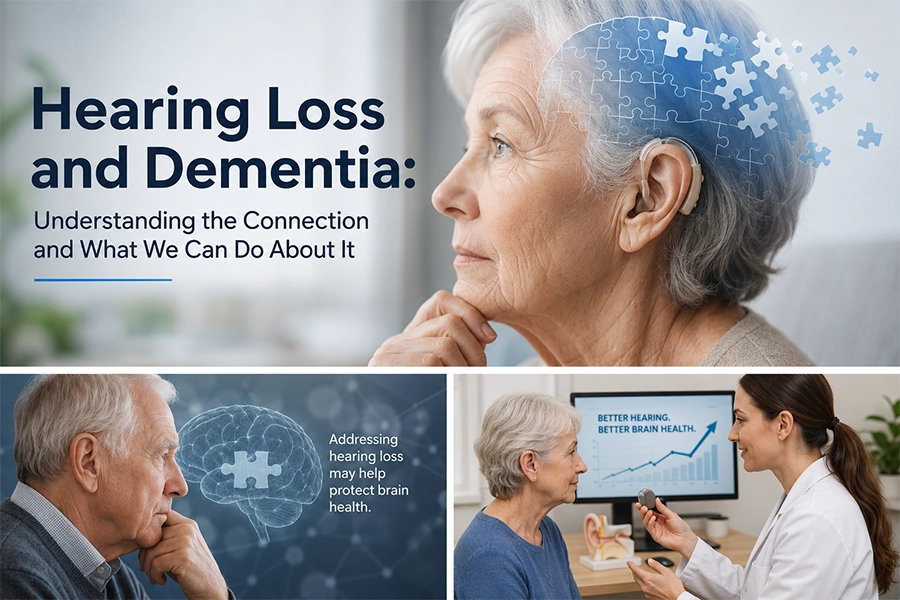
Hearing Loss and Dementia: What the Science Really Says
By Dr. Keith Darrow, Ph.D. — Neuroscientist & Audiologist
Published July 16th 2026
Have you started turning up the TV? Do you ask people to repeat themselves? Maybe you smile and nod in a noisy room, even when you miss half the words. Many people treat this as normal aging. But the link between hearing loss and dementia is stronger than most people think. And it may be one of the easiest health risks to act on.
Quick Answer: Hearing loss is the top dementia risk factor that you can actually change. In fact, a major 2024 study links it to about 7% of all dementia cases. This does not mean hearing loss will cause dementia. It also does not mean hearing aids are a cure. But treating hearing loss is safe. It helps your daily life right away. And for people most at risk, it may help protect the brain. The key is to act early.
Why Hearing Loss and Dementia Are Linked
In 2024, a group of experts called the Lancet Commission looked at hundreds of studies. They reached a big conclusion. About 45% of dementia cases could be prevented or delayed. To do this, we would need to address 14 risk factors over a lifetime.
Hearing loss sat at the top of that midlife list. On its own, it is tied to about 7% of all dementia cases. So it ranks above risks people worry about far more, like smoking or high blood pressure.
Here is why that matters. You cannot change your age. You cannot change your genes. But you can do something about your hearing. That makes it a powerful place to start.
How Your Ears Affect Your Brain
This part surprises many people. What do the ears have to do with memory? Quite a lot, it turns out. Researchers point to three main reasons.
Your Brain Works Harder
When sound comes in weak or unclear, your brain has to fill in the gaps. That takes effort. And it pulls energy away from memory and focus, day after day.
Your Brain Gets Less Input
The brain is a use-it-or-lose-it organ. When the ears send fewer signals, the hearing part of the brain can grow weaker over time. Nearby areas can suffer too.
You Pull Back From People
People who cannot follow talk often go quiet. They skip calls and gatherings. But being alone is its own dementia risk factor. So hearing loss can start a chain reaction.
One honest note. Experts are still learning how much of this is cause and how much is effect. I would rather tell you that plainly than oversell it.
Does Treating Hearing Loss Really Help?
This is the question I hear most. So let me give you a straight answer.
The biggest study we have is the ACHIEVE study from 2023. It followed nearly 1,000 older adults. And the results were mixed, in a useful way.
For the whole group, hearing treatment did not clearly slow mental decline over three years. But one group stood out. Among people already at higher risk, treatment cut the rate of decline by nearly half. In other words, the people with the most to lose gained the most.
That is why I do not wait for hearing loss to get severe. Consider this too. About two in three adults over 60 have some hearing loss. Yet fewer than one in five who could benefit actually treat it. That is a lot of extra strain on a lot of brains.
What the Medical Approach Means
Buying a hearing aid online is not the same as treating hearing loss. The device is only one piece.
A real medical exam looks at the whole person. It checks the type and level of your loss. It looks at your balance and overall health. And it sets up a plan that is tested and adjusted over time. That is the difference between simply making sound louder and truly caring for your brain.
Want the full picture? See our guide to the medical approach.
Ready for a Real Evaluation?
An EIA-certified specialist can give you a full, medical-grade hearing exam — and a plan built for you.
What You Can Do Now
You do not need to feel scared. You just need a plan. Here are three simple steps.
First, get a baseline hearing test. Even if your hearing seems fine, a baseline helps you catch changes early. And early is when treatment works best.
Second, do not wait years. Most people wait almost a decade to act. That is a decade of extra strain on the brain.
Third, see a specialist who takes the medical approach. This is about your brain, not just a gadget. You can also learn more on our hearing and brain health page.
Your hearing keeps you close to the people you love. So protecting it may protect your mind too.
Frequently Asked Questions
Does hearing loss cause dementia?
Hearing loss is strongly linked to a higher dementia risk. It is the largest risk factor you can change in midlife. Experts have not proven direct cause and effect. But the link shows up in many large studies. So treating it early is worth taking seriously.
Can hearing aids prevent dementia?
There is no promise here. But in the ACHIEVE study, treatment slowed decline by nearly half in higher-risk adults. It also cuts down on isolation and mental strain. Both of those help your brain.
At what age should I get my hearing checked?
A baseline test in your 50s is smart. Get one sooner if you notice any trouble. Early testing gives you the most options.
Is mild hearing loss worth treating?
Yes. Even mild loss makes your brain work harder. And it can start the slow pull toward isolation. So acting early is almost always easier than waiting.
How do I find a good specialist?
Look for a full exam, verified fittings, and follow-up care. You can find an EIA-certified specialist near you to begin.
About the Author
Dr. Keith Darrow, Ph.D.
is a neuroscientist and audiologist with over 20 years in hearing care. He founded the Excellence in Audiology network. He is also a published author, and his work has been featured across national media. Read his full bio →
Reviewed by: Dr. Keith Darrow, Ph.D. | Date: July 16th 2026